
In Australia’s heat, engines work hard and get hotter than many drivers think. When oil stays between 180-210°F, it works well. But, if it gets hotter, it can break down and lose its protective qualities.
An oil cooler upgrade is smart, not just for looks. It’s a special heat exchanger for oil, not the same as the radiator. Its job is to cool the oil, preventing overheating and wear on engine parts.
Some signs of needing an oil cooler upgrade are slow and quiet, like oil getting hotter during climbs. Others are urgent. If oil mixes with coolant, it can look milky or frothy. This is a big warning sign.
This guide helps you spot normal signs versus urgent ones. It also talks about driving patterns that increase engine heat. If you tow a caravan, a special oil cooler can keep your engine cool. We’ll look at options in Australia, how to install them, and how to keep them working well.
Key Takeaways
- Engine oil temperature is healthiest around 180-210°F; sustained heat above that can thin oil and reduce protection.
- A car oil cooler is a dedicated oil heat exchanger, separate from the radiator, built to control oil heat.
- Common oil cooler upgrade signs include rising oil temps, heat soak in traffic, and pressure that falls when hot.
- Milky or frothy oil or coolant can point to oil mixing with coolant and needs fast attention.
- Hot weather, hills, and towing are common in Australia and can justify an oil cooler upgrade Australia drivers can rely on.
- A towing oil cooler can help prevent engine overheating and improve oil pressure stability under load.
What an Engine Oil Cooler Does and Why It Matters
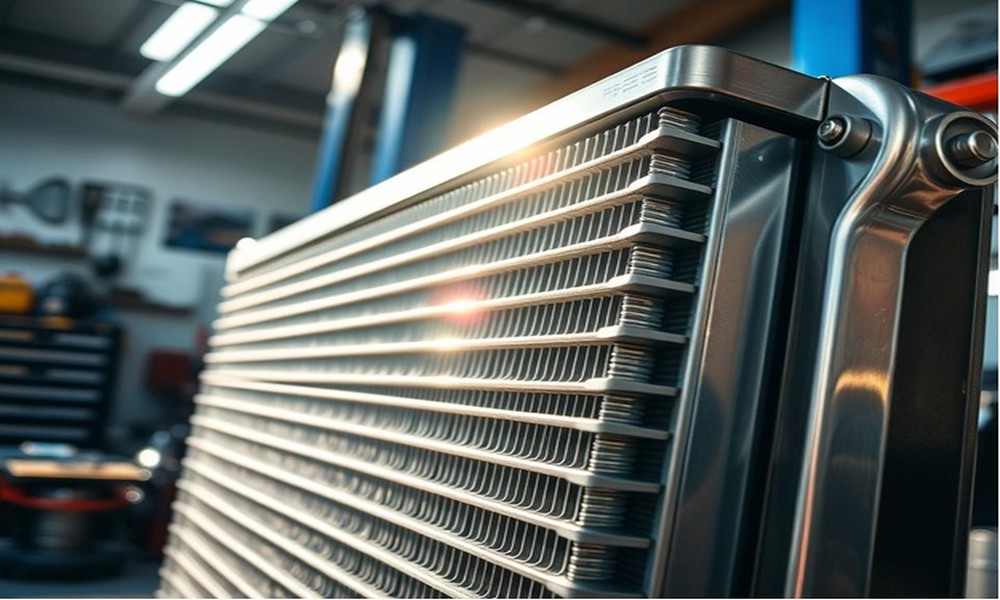
So, what does a car oil cooler do? It’s like a small radiator for engine oil. It’s usually smaller than the main radiator. Many cars in Australia already have one, so the question is often about size, not if you need one.
The main radiator handles coolant and engine temperature. The oil cooler focuses on oil temperature. This is because oil carries heat away from engine parts.
Oil works best at 180-210°F. If it gets too hot, it can break down. This makes the oil thinner and less protective.
Hot oil goes through the cooler, where air or coolant takes out heat. Then, it goes back to the engine. Some coolers have a thermostat to control temperature.
|
Oil temperature range (°F) |
What’s happening in the oil |
What you may notice in the car |
How a cooler or oil cooler thermostat helps |
|
160-179 |
Oil is warming up; flow improves but may be thick |
Slower response and higher drag in cold starts or short trips |
Thermostat can stay closed to speed warm-up and avoid over-cooling |
|
180-210 |
Target zone for protection and stable lubrication |
Stable pressure and consistent feel under normal driving |
Supports steady oil temperature control without chasing extremes |
|
211-250 |
Heat load rises; thinning begins under stress |
Pressure may dip at idle after hard driving |
Extra cooler capacity can pull temps back by roughly 30-50°F |
|
251-275+ |
Higher risk of oil viscosity breakdown and faster degradation |
More obvious oil pressure loss and higher wear risk |
Thermostat fully opens; a larger cooler and better airflow become critical |
Common Signs a Car Oil Cooler Upgrade Is Needed
Most drivers don’t need extra oil cooling for daily driving. This is because cars are made for average use. But, if you always hit the same high temperature, a cooler upgrade might help.
A high oil temperature reading when driving hard is a clear sign. You might see this on a gauge, OBD readout, or data screen. If the temperature goes up fast and stays high, your oil cooler might not be enough.
High oil temperature can also mean your car overheats when working hard. This can make the oil thinner. Over time, this can make your engine feel unstable in tough conditions.
Notice how your car acts when it’s hot. If it loses power, idles rough, or uses more fuel after hard driving, it might be due to hot oil. These signs suggest your oil isn’t cooling well, which could be fixed with a cooler upgrade.
For many, the test is on a track day. A few laps can make the oil too hot. More cooling can help keep the oil at a safe temperature.
Driving with a trailer can also push the limits. Towing can make the car overheat, which is common in hot weather. If this happens often, it might mean you need a bigger oil cooler.
|
Observable sign |
When it often appears |
What it suggests about cooling |
|
High oil temperature that stays elevated |
Long climbs, highway cruising in heat, sand driving |
Current oil cooler capacity is near its limit during sustained load |
|
Overheating under load with a heat-soaked feel |
Heavy throttle, steep grades, stop-start after a hard pull |
Oil heat is adding overall thermal stress even if coolant looks “okay” |
|
Power drop, rough idle, or higher fuel use after hard driving |
After repeated acceleration or extended high RPM |
Oil may be thinning, reducing lubrication stability and efficiency |
|
Track day oil temps climb quickly and recover slowly |
Back-to-back laps or long sessions |
More oil cooler surface area and airflow are needed to shed heat faster |
|
Towing overheating on predictable routes |
Boat, camper, or horse trailer on hot days |
Real-world load exceeds the factory cooling target for average driving |
Red-Flag Symptoms of Oil Cooler Failure That Require Immediate Action
Some oil cooler failure symptoms can quickly lead to engine damage. If you notice anything odd while driving, stop right away. Don’t wait until you get home.
Oil and coolant mixing is a big problem. It shows up as milky oil on the dipstick or a frothy film under the oil cap.
This issue can also cause coolant contamination in the reservoir. It might look like brown sludge or an oily sheen. An internal crack in the oil-to-water cooler can let fluids mix and spread through both systems.
External leaks are also a concern. An oil cooler leak can start as dampness around fittings. It can turn into puddles under the vehicle after a short park.
Look for dripping oil near hoses or coolant seepage around the cooler body and seals. Either one can drop levels and cause overheating, which is a big problem on Australian highways.
Low flow is another warning sign. If the oil pressure warning light flickers, stays on, or comes back on after a restart, it might mean the cooler is failing. This can affect pressure where it counts.
Low pressure and rising temps are a bad mix. Hot, thinned oil can’t protect bearings and turbo parts like it should. So, don’t ignore these symptoms as just “normal heat.”
|
Red-flag sign |
What you may notice |
Why it’s urgent |
|
oil and coolant mixing |
Sweet smell with oily residue, unstable levels in both systems |
Lubrication breaks down and cooling efficiency drops at the same time |
|
milky oil |
Tan or coffee-colored sludge on dipstick or under oil cap |
Moisture and coolant in oil can attack bearings and metal surfaces fast |
|
coolant contamination |
Oily sheen in overflow bottle, brown film, gunk on reservoir walls |
Contaminated coolant can’t move heat well and may damage hoses and seals |
|
oil pressure warning light |
Light on during idle, cornering, or sustained cruising |
Low pressure can starve critical parts, specially at highway RPM |
|
oil cooler leak |
Wet fittings, drops on undertray, fresh spots on the driveway |
Rapid fluid loss can lead to overheating and pressure loss without much warning |
Driving Conditions That Increase Oil Heat and Justify an Upgrade
When the engine works hard but cooling airflow is low, oil temperature goes up fast. City driving, with lots of stops and starts, can trap heat. This makes the radiator fans work a lot, keeping the engine hot.
In Australia, the heat is already high before you even start driving. This makes it harder for the engine to cool down. When the oil gets too hot, it can lose its strength and pressure.
Towing a trailer makes the engine work even harder. This is because the trailer adds weight and makes the engine work harder on hills. A towing oil cooler can help keep the engine cool when towing.
Driving fast on a track can also make the oil temperature rise. A special oil cooler is needed for this. It helps keep the oil cool during long, fast drives.
For those who drive heavy-duty, keeping the oil at a stable temperature is key. Oil-to-water coolers work well for this. They can adjust quickly to changes in load. Oil-to-air coolers are good when there’s clean air to cool the oil.
|
Driving condition |
Why oil heat rises |
What drivers often notice |
Upgrade angle |
|
Stop-and-go traffic overheating |
Low airflow and repeated heat soak at low speed |
Hot smell after parking, temp gauge creeping higher in queues |
Focus on airflow, ducting, and a cooler that works at low road speed |
|
Towing oil cooler scenarios |
High load for long periods, extra heat from sustained throttle |
More frequent downshifts, higher temps on hills, fan running often |
Choose capacity for trailer weight and long climbs, not short bursts |
|
Track day oil cooler needs |
Sustained high RPM, higher oil shear, little recovery time |
Temps rising session to session, oil feeling “tired” sooner |
Prioritize a high-flow core and secure mounting for vibration and speed |
|
High ambient temperature driving |
Less cooling margin because intake air and coolant start hotter |
Temps rise sooner during errands, harder recovery after a climb |
Size the system for worst-day conditions, not average weather |
|
Australia hot climate driving |
Extended heat exposure plus long distances at steady load |
Higher temps during summer highway runs and regional travel |
Pair cooler choice with oil grade and service intervals suited to heat |
|
Heavy-duty use |
Repeated load cycles, high torque demand, and longer operating hours |
Less stable oil pressure when hot, more heat after hard pulls |
Consider oil-to-water for fast control, or oil-to-air if airflow is reliable |
Oil Cooler Types and How to Choose the Right Setup
When comparing oil-to-air vs oil-to-water coolers, think about how they move heat. Oil-to-water coolers use engine coolant, so they warm up fast and stay steady under load. But, a failure can mix oil and coolant, which is dangerous.
Oil-to-air coolers work like small radiators, using air to shed heat. They’re easy to add to cars and fit many models. They work well as long as they get clean, steady air.
Control hardware is key. A thermostatic bypass valve stops over-cooling in cool mornings or light driving. It lets oil flow around the cooler until it’s warm enough, then mixes it for safe oil temperatures.
Core design is a big choice: plate vs tube-and-fin oil coolers. Plate cores cool well in tight spaces and handle pressure. Tube-and-fin designs are lighter but need more space for the same cooling.
Size and flow path affect the cooler’s performance. A 10 row 30 row oil cooler choice depends on heat needs and space. More passes in the core mean better cooling before returning to the pan.
|
Decision point |
What to look for |
Good fit for |
Trade-off to plan around |
|
oil-to-air vs oil-to-water cooler |
Available airflow vs access to coolant lines; temperature stability needs |
Oil-to-air for most aftermarket upgrades; oil-to-water for tight packaging and steady temps under heavy load |
Oil-to-water adds mixing risk if a leak occurs; oil-to-air depends heavily on airflow quality |
|
plate vs tube-and-fin oil cooler |
Core density, pressure tolerance, and space efficiency |
Plate for high heat in limited space; tube-and-fin for strong airflow and lighter builds |
Plate can cost more; tube-and-fin may need a larger face area for the same result |
|
10 row 30 row oil cooler |
Oil capacity, power output, radiator size, and mounting clearance |
10 row for mild street use; 30 row for towing, track work, or high ambient temps |
Bigger isn’t better if it blocks the radiator or sits in low airflow |
|
single pass double pass triple pass |
How long oil stays in the core and how the lines will route |
Single pass for low restriction; double/triple pass for more heat drop in the same footprint |
More passes can add restriction and may call for careful hose sizing and routing |
|
thermostatic bypass valve |
Setpoint range and whether it’s built into the sandwich plate or inline |
Street cars that see mixed weather; turbo or performance builds that need stable oil temps |
Needs space to mount and service; adds more joints that must be sealed well |
To pick the right oil cooler, match it to your car’s system. Consider oil capacity, engine power, and radiator size first. Then think about airflow, mounting space, and your driving habits.
Choose the biggest cooler that fits without blocking airflow. Make sure there’s room for hose bends and a thermostat module. This detail can make a single pass double pass triple pass layout easy or hard to set up.
Upgrade Planning and Installation Factors That Affect Results
Before you install a car oil cooler, think of airflow and plumbing as one system. Place the core at the front, between the radiator and grille. This spot has steady air flow. Also, make sure it doesn’t block other heat exchangers.
Line length is more important than many think. Mount the cooler close to the filter for clean airflow. Shorter lines mean less pressure drop and fewer problems.
Most installs start by removing the old oil filter. Then, oil is redirected to the cooler and back. A vehicle-matched sandwich plate adapter is a good choice when space is tight. It works well if the fittings sit square and hoses don’t rub on sharp edges.
When space is cramped, an oil filter relocation kit can help. Move the filter to a reachable spot. This way, oil flows to the cooler, then to the filter, and back to the engine. This layout reduces clutter and keeps hose runs deliberate.
|
Planning factor |
What to check |
Why it changes results |
|
Airflow zone |
Clear path between grille and radiator; no contact with A/C condenser lines |
Better heat rejection at speed and less heat soak in slow traffic |
|
Hose length and bends |
Minimize total length; avoid tight turns; protect near exhaust and steering |
Lower restriction, steadier oil pressure, and fewer spots that can weep |
|
Adapter choice |
Correct thread pitch and gasket face; adequate clearance for fittings |
Proper sealing and fewer surprises during filter changes |
|
Temperature control |
Add a thermostat or bypass valve if the vehicle sees cool mornings |
Helps prevent overcooling and supports stable warm-up behavior |
To avoid oil leaks, treat every joint like it will be tested by vibration and heat cycles. Use the right tools, including flare nut or line wrenches on fittings. Re-check clamps and threads after the first heat soak. If the layout requires cutting, drilling, or complex brackets, the owner’s manual and a qualified professional can help keep the setup safe and compliant for Australian road use.
Maintenance, Lifespan Expectations, and When Replacement Makes Sense
There’s no set time for an oil cooler change. But, most last about 100,000 to 150,000 miles. In Australia, long drives, towing, and hot weather can make oil hotter and shorten its life.
Heavy-duty and performance driving also adds heat and pressure. This can make parts wear out faster.
Start with simple oil cooler maintenance tips for all year. Check for leaks around the cooler core, hoses, and fittings. Look for fresh oil mist or damp spots.
Also, keep an eye on oil and coolant levels. Any unexplained drop is a warning sign.
Even before leaks show, coolers can get clogged, corroded, or damaged. This can reduce heat transfer and restrict oil flow. It may cause oil temps to rise and low oil pressure when the engine is under load.
Using good fluids helps. Synthetic oil sludge prevention is a big reason many drivers choose quality full synthetic oil.
If the cooler is leaking, clogged, or tied to overheating, replace it right away. This is true even if it doesn’t seem like it’s time yet. After a major overheating event, like a blown head gasket, contamination and stress can shorten cooler life.
In such cases, many shops will flush the cooling system. They will then check temps and pressure. This keeps the engine safe in Australia’s heat.

Comments are closed.