Archive

2025

Browsing

Car taillights are critical for safe driving, especially at night or during poor weather conditions. When a taillight suddenly stops working, it can be frustrating and dangerous. One common but often overlooked cause of taillight failure is a faulty fuse. Understanding the role of fuses in your vehicle’s lighting system and how fuse problems occur can help you quickly identify and fix taillight issues, keeping you safe and compliant with traffic laws.

The Role of Fuses in Car Taillight Functionality

Fuses act as safety devices that protect your car’s electrical circuits from damage caused by power surges or short circuits. Each fuse is designed to break the electrical connection when current exceeds a certain level, preventing overheating and potential fires. In the taillight circuit, fuses ensure that excess current from wiring faults or component failures doesn’t damage the bulbs or wiring harness. If the fuse blows, it interrupts power flow to the taillight, causing it to stop working completely.

Common Signs of a Blown Taillight Fuse

A blown fuse is often the simplest explanation for one or more taillights suddenly failing. Common signs include taillights that do not illuminate at all, flickering lights, or certain functions like brake lights or turn signals not working properly. Unlike burned-out bulbs, which usually affect only one light, a blown fuse can disable multiple lights simultaneously because it cuts power to the entire circuit. If you experience sudden, unexplained taillight failure, checking the fuse should be one of your first troubleshooting steps. A smart choice comes there when you choose the Auto Repair in Oklahoma City, OK based service.

Causes of Fuse Failures in Taillight Circuits

Fuses typically blow due to electrical faults such as short circuits, wiring damage, or component failures. Moisture intrusion in the taillight assembly or corroded wiring can cause a short that triggers the fuse to blow. Faulty or worn-out bulbs that draw excessive current can also stress the fuse. Occasionally, installing the wrong fuse size or a low-quality replacement can lead to repeated failures. Identifying the root cause of the blown fuse is critical to prevent ongoing issues and avoid potential electrical damage.

How to Check and Replace a Taillight Fuse

Checking a fuse is a straightforward process that most vehicle owners can perform with minimal tools. Locate the fuse box (usually under the dashboard or hood), identify the taillight fuse using the diagram, and inspect it for a broken filament or discoloration. If the fuse is blown, replace it with one of the exact same amperage rating. Avoid using a fuse with a higher rating as it can allow unsafe current levels, risking further damage. After replacement, test the taillights; if the fuse blows again, professional electrical diagnosis is recommended.

Preventing Future Fuse Problems

Regular maintenance of your car’s electrical system helps reduce the risk of fuse issues. Inspect taillight wiring for damage, keep connectors clean and dry, and promptly replace faulty bulbs. If your vehicle frequently blows fuses, have a technician perform a detailed inspection to identify shorts or other electrical problems. Using quality replacement parts and avoiding overloading circuits will also keep your taillight fuse working smoothly.

Behind Singapore’s gleaming façade of efficient urban planning lies a little-understood industry that processes thousands of vehicles annually, yet Scrap Car Singapore operations remain largely invisible to the very people who depend on them most. Every month, roughly 4,000 vehicles reach the end of their regulated lifespan in Singapore, creating a complex ecosystem of recycling, regulation, and remarkable economics that most car owners discover only when facing their own automotive crossroads.

The Numbers That Tell the Real Story

Walk through any of Singapore’s authorised scrap car facilities, and the scale becomes immediately apparent. Mountains of salvaged steel rise like metallic hills, whilst precision machinery sorts copper wiring with surgical accuracy. The statistics reveal an industry processing approximately 48,000 vehicles annually—each one representing a family’s transportation solution that has reached its regulatory endpoint.

The financial flows prove equally impressive. Industry data suggests that Singapore’s automotive recycling sector processes materials worth tens of millions of dollars each year, yet individual vehicle owners often capture only a fraction of this value due to information asymmetries and processing inefficiencies.

These facilities operate with industrial precision that would impress any manufacturing engineer. Advanced hydraulic systems can process a complete vehicle in under two hours, separating materials with efficiency rates exceeding 90%. The contrast between this industrial capability and the confusion experienced by individual car owners reveals a significant knowledge gap.

Inside the Machine: How Your Car Becomes Cash

The transformation process begins the moment a vehicle enters an authorised facility. Trained technicians conduct systematic fluid drainage of engine oil, transmission fluid, brake fluid, and coolant, each requiring specific handling protocols to meet environmental standards. This preliminary step alone can take 45 minutes for a typical sedan.

Next comes the methodical dismantling phase:

  • Battery removal: Lead-acid batteries command immediate resale value
  • Catalytic converter extraction: Contains precious metals worth hundreds of dollars
  • Tyre assessment: Serviceable tyres often find secondary markets
  • Electronic component recovery: Modern vehicles contain surprising amounts of recoverable technology
  • Engine block separation: Cast iron and aluminium components enter different processing streams

The precision required becomes evident when observing technicians work. A single mistake in fluid handling can contaminate entire material batches, whilst improper dismantling can damage valuable components beyond recovery.

The Human Stories Behind the Statistics

Meet Sarah Tan, a 34-year-old marketing executive whose Honda reached its COE expiry last month. Like many Singaporeans, she initially considered the scrapping process a bureaucratic nightmare. “I expected weeks of paperwork and minimal returns,” she recalls. “Instead, the entire process took three days, and I received enough to cover the deposit on my next vehicle.”

Her experience illustrates how individual expectations often diverge from reality. The gap between perception and actuality creates opportunities for those who understand the system whilst disadvantaging those who don’t.

The Regulatory Framework That Changes Everything

Singapore’s Certificate of Entitlement system creates unique dynamics absent in other automotive markets. Unlike countries where vehicles might operate for decades, Singapore’s regulatory environment ensures predictable disposal timelines that enable more efficient processing systems.

The Land Transport Authority maintains strict oversight of the entire process, requiring detailed documentation at each stage. This regulatory framework protects consumers whilst ensuring environmental compliance, but it also creates complexity that intimidates uninformed vehicle owners.

Understanding these regulations proves crucial for maximising outcomes. Vehicle owners who approach disposal with proper knowledge consistently achieve better results than those who stumble through the process uninformed.

The Environmental Imperative Driving Innovation

Singapore’s commitment to environmental sustainability has transformed automotive recycling from basic scrap processing into sophisticated material recovery operations. Modern facilities recover everything from rare earth elements in electronic systems to specialised plastics used in interior components.

As one industry veteran explains: “Twenty years ago, we were essentially scrap dealers who happened to work with cars. Today, we’re materials recovery specialists who understand the molecular composition of every component. The technology and expertise required have increased exponentially, but so has our ability to extract value from every vehicle.”

This evolution reflects Singapore’s broader commitment to circular economy principles. What once represented waste disposal has become resource recovery, creating value streams that benefit both individual vehicle owners and society broadly.

The Technology Revolution Transforming Operations

Sophisticated sorting systems now identify and separate materials with precision that was impossible just a decade ago. Optical recognition technology can distinguish between different grades of plastic, whilst magnetic separation systems recover ferrous materials with near-perfect efficiency.

These technological advances translate directly into improved outcomes for vehicle owners. More efficient processing means higher recovery rates, which ultimately supports better payouts for end-of-life vehicles.

The Decision Matrix: Timing Your Move

Market conditions significantly influence final outcomes, with factors including global commodity prices, seasonal demand patterns, and regulatory changes all affecting values. Vehicle owners who understand these dynamics can time their disposal decisions to capture optimal returns.

The key lies in recognising that vehicle disposal represents a market transaction subject to the same economic forces that affect other commodity trades. Strategic timing, proper preparation, and professional guidance can significantly impact final outcomes.

Your vehicle’s end-of-life transition doesn’t have to be a source of stress or financial disappointment when you understand how to navigate the sophisticated systems that comprise Scrap Car Singapore operations.

Ceramic coating has become more than just automotive protection in Singapore—it represents a quiet revolution in how residents safeguard their most valuable possessions against the relentless tropical climate, whilst spray paint services offer redemption stories for vehicles bearing the scars of urban life. In this city-state where a car can cost more than a house elsewhere, every scratch tells a story, and every protective measure becomes an act of preservation that speaks to deeper human needs for security and pride.

The Weight of Ownership in Singapore’s Unique Landscape

Maria, a marketing executive in Tanjong Pagar, remembers the day she collected her first car—a modest hatchback that cost her family S$120,000 after COE premiums. “I couldn’t sleep for weeks,” she recalls, running her fingers along the pristine paintwork. “Not because of the debt, but because I knew what this climate could do.” Her anxiety wasn’t unfounded. Singapore’s combination of intense UV radiation, frequent tropical downpours, and high humidity creates a perfect storm for automotive deterioration.

The psychological burden of vehicle ownership here extends far beyond financial considerations. When replacement costs soar due to import taxes and certificate systems, every owner becomes an unwitting custodian of their investment. This responsibility weighs heavily, particularly on young families stretching their budgets for mobility.

Understanding Protection: The Science Behind the Shield

Modern ceramic coating technology offers molecular-level protection that traditional waxes cannot match. The process involves applying liquid polymer that chemically bonds with the vehicle’s factory paint, creating a protective layer that can last years rather than months.

The benefits include:

•        Enhanced UV protection preventing paint oxidation

•        Hydrophobic properties that repel water and contaminants

•        Chemical resistance against bird droppings and tree sap

•        Easier cleaning and maintenance routines

•        Improved gloss retention over time

Dr. Sarah Lim, a materials scientist at the National University of Singapore, explains the technology’s appeal: “In our climate, unprotected paint doesn’t just fade—it degrades at an accelerated rate. Ceramic coatings provide a barrier that’s particularly crucial in tropical environments where traditional protection methods fail.”

The Human Stories Behind Spray Paint Services

Behind every spray paint service lies a narrative of mishap, hope, and restoration. James, a taxi driver from Woodlands, discovered a keyed scratch along his vehicle’s side panel—likely the work of someone frustrated with traffic or life circumstances. “My heart sank,” he remembers. “That car feeds my family.”

Spray paint services in Singapore have evolved to address not just cosmetic damage but the emotional toll of vehicle deterioration. Modern spray painting techniques can:

•      Match original factory colours with precision

•      Repair localised damage without full panel replacement

•      Restore vehicles to near-original condition

•      Provide cost-effective alternatives to insurance claims

•      Offer quick turnaround times for commercial vehicles

The industry has professionalised significantly, moving beyond backyard operations to sophisticated facilities using computer-matched colours and climate-controlled environments. “We’re not just fixing paint,” explains one veteran technician who preferred anonymity. “We’re restoring people’s confidence and dignity.”

Climate Challenges: Fighting Nature’s Relentless Assault

Singapore’s tropical climate presents unique challenges that drive demand for both ceramic coating and spray paint services. The combination of intense sunlight, acid rain from industrial activity, and organic contaminants like tree sap creates a constant assault on vehicle surfaces.

The morning commute becomes a daily exposure to UV radiation that would take weeks to accumulate in temperate climates. Afternoon thunderstorms, whilst providing relief from heat, often carry acidic compounds that etch unprotected paint. Evening parking beneath the island’s lush greenery exposes vehicles to bird droppings, tree sap, and other organic compounds that can permanently stain untreated surfaces.

Economic Realities: Investment Versus Expense

For many Singaporeans, the decision to invest in ceramic coating or require spray paint services reflects broader economic anxieties. When a family’s second-largest investment after housing sits exposed to the elements, protection becomes essential rather than optional.

Research conducted by local automotive associations suggests that proper paint protection can maintain vehicle resale values by up to 15% compared to untreated vehicles. In a market where depreciation rates are already steep due to COE expiry dates, this difference can amount to thousands of dollars.

The Emotional Dimension: Pride and Vulnerability

Vehicle ownership in Singapore carries emotional weight that extends beyond mere transportation. Cars represent freedom in a densely populated city, status in a competitive society, and security for families navigating uncertain economic times. When that symbol becomes damaged or degraded, the psychological impact can be profound.

Linda, a mother of two from Punggol, describes her reaction to discovering scratches on her family car: “It felt personal, like someone had vandalised our home. That car represents years of saving and sacrifice.” Her experience illustrates how vehicle damage transcends material concerns, touching on feelings of violation and vulnerability.

Looking Forward: Sustainability and Innovation

Singapore’s automotive protection industry increasingly embraces sustainable practices, reflecting the nation’s broader environmental commitments. Water-based paint systems reduce volatile organic compound emissions, whilst advanced ceramic formulations promise longer-lasting protection with reduced environmental impact.

Innovation continues driving both industries forward. Nano-ceramic technologies offer enhanced protection, whilst advanced spray painting techniques reduce material waste and improve colour matching accuracy. These developments serve not just environmental goals but human needs for reliability and peace of mind.

Conclusion: Protection as Care

In Singapore’s unique automotive landscape, the choice to invest in ceramic coating and utilise spray paint services reflects deeper human instincts about protection, care, and preservation of what matters most. These industries serve not just vehicles but the people who depend on them, offering security in an uncertain world where every journey matters and every surface tells a story of resilience against the elements.

The evolution of the minibus Singapore has witnessed over the past five decades offers a compelling lens through which to examine the broader transformation of Southeast Asian urban mobility and the complex relationship between state planning and social adaptation. From the chaotic entrepreneurial fervour of the 1970s to today’s regulated and increasingly sophisticated transport ecosystem, the minibus serves as both artifact and agent of Singapore’s metamorphosis from colonial port to global city-state.

Historical Foundations: The Colonial Legacy and Post-Independence Innovation

To understand Singapore’s contemporary minibus landscape, one must first appreciate the historical context that shaped its emergence. The island’s transport infrastructure inherited from British colonial rule was designed primarily to facilitate the movement of goods and colonial administrators, not the diverse mobility needs of an independent, rapidly urbanising population.

The minibus phenomenon that emerged in the 1970s represented a grassroots response to this infrastructural gap. Local entrepreneurs, many of them recent immigrants or working-class Singaporeans, recognised an opportunity to serve communities inadequately connected by existing bus routes. This period of relative regulatory laissez-faire allowed for experimentation that would later inform official transport policy.

The parallel with other post-colonial societies is instructive. Just as shared taxis evolved in South Africa or jeepneys proliferated in the Philippines, Singapore’s early minibus culture reflected the universal tension between formal planning and informal innovation that characterises urban development in newly independent states.

Regulatory Evolution and the Discipline of Urban Planning

Singapore’s approach to minibus regulation reveals the distinctive characteristics of its developmental state model. Unlike cities where informal transport operates in perpetual tension with authority, Singapore chose to incorporate and systematise rather than suppress.

The government’s strategy involved several key elements:

•       Licensing systems that professionalised drivers whilst maintaining service flexibility

•       Route coordination to complement rather than compete with mass transit

•       Safety standards that elevated operational quality without stifling innovation

•       Integration with broader transport planning that recognised minibuses as essential infrastructure

•       Economic frameworks that balanced entrepreneurship with public service obligations

This regulatory approach reflects what urban planning scholars term “adaptive governance”—the capacity to harness market innovation whilst directing it towards collective goals. The Singapore model demonstrates how small-scale transport can be neither purely commercial nor entirely state-controlled, but rather occupy a carefully managed middle ground.

Social Dynamics and Community Connectivity

The social significance of minibuses extends far beyond mere transportation logistics. In Singapore’s ethnically diverse society, minibuses often serve as informal spaces of cultural exchange, where residents from different backgrounds share brief but meaningful encounters during their daily journeys.

Observational studies reveal how minibus routes frequently serve as lifelines for elderly residents in housing estates, providing door-to-door connectivity that larger buses cannot offer. The flexibility to accommodate wheelchairs, shopping trolleys, and other personal effects makes minibuses particularly valuable for populations with specific mobility requirements.

The drivers themselves often become integral figures in neighbourhood life, developing relationships with regular passengers that extend beyond mere service provision. This social dimension recalls the role of streetcar conductors in early twentieth-century American cities or bus drivers in post-war British communities—transport workers who served as informal community facilitators.

Economic Implications and Labour Market Dynamics

The minibus sector’s economic impact illuminates broader patterns in Singapore’s labour market evolution. For many drivers, minibus operation represents a pathway to small-scale entrepreneurship that requires relatively modest capital investment compared to other business ventures.

As transport economist Dr. Elena Marchetti observes, “Singapore’s minibus sector demonstrates how thoughtful regulation can preserve the entrepreneurial spirit of informal transport whilst ensuring service quality and safety standards. It’s a model that balances individual economic opportunity with collective urban mobility needs.”

The sector also provides employment flexibility particularly valued by older workers and those seeking to supplement primary incomes. This economic function becomes increasingly important as Singapore, like other developed economies, grapples with demographic transitions and changing labour market expectations.

Technological Integration and Future Adaptations

Contemporary developments in Singapore’s minibus sector reflect broader trends towards technological integration in urban transport. Digital booking platforms, real-time tracking systems, and electronic payment methods have modernised operations whilst preserving the personal scale that distinguishes minibuses from mass transit.

The integration of environmental considerations—through hybrid engines and route optimisation—demonstrates how traditional transport modes can adapt to contemporary sustainability imperatives. This evolution parallels broader patterns in urban policy where established systems incorporate new technologies rather than being replaced by them.

Comparative Perspectives and Global Lessons

Singapore’s minibus experience offers valuable insights for other cities seeking to balance transport efficiency with social equity. The success of regulatory integration suggests that informal transport need not be viewed as a problem to be solved but rather as a resource to be optimised.

Cities from Cape Town to Manila face similar challenges in incorporating small-scale transport into formal planning frameworks. Singapore’s approach—emphasising coordination rather than competition, quality rather than quantity—provides a potential model for reconciling entrepreneurial transport provision with systematic urban planning.

The minibus Singapore continues to evolve today represents more than a transport mode; it embodies a distinctive approach to urban governance that values both efficiency and human scale, both innovation and regulation, both individual enterprise and collective welfare.

Introduction: Why the Electric Car Landscape is Buzzing in Singapore

Singapore’s roads are changing fast. More drivers are switching to electric vehicles (EVs) as eco-friendliness, rising petrol prices, and government incentives make internal combustion cars look old-fashioned. But with so many options from BYD’s versatile line-up to Tesla’s tech-heavy models, MG’s budget-friendly choices and Hyundai’s futuristic designs – how do you know which EV really fits your lifestyle and wallet?

At Jack Cars, we understand that buying your first or next electric car isn’t just about specs and sticker price. It’s about matching your needs for daily commuting, space for family trips, or a touch of luxury, all while keeping running costs predictable. Below, we dig into how BYD stacks up against Tesla, MG, and Hyundai so you can decide confidently.

Most Popular Electric Car Brands in Singapore Right Now

BYD has quickly carved out a reputation as an affordable yet cutting-edge choice. Models like BYD Atto 3, Dolphin, Seal, and the practical e6 taxi are increasingly spotted around town.

Tesla remains dominant among those who love technology and recognisable branding, with the Model 3 and Model Y leading its charge.

MG appeals to buyers looking for value-for-money, offering the MG ZS EV and MG 4. Hyundai’s Kona Electric and the retro-inspired Ioniq 5 bring Korean build quality and established service networks into play. Optional models like the Kia EV6 and Nissan Leaf expand consumer choices further, especially amongst savvy urbanites searching “BYD car Singapore” or “explore the latest BYD electric vehicles in Singapore.

How Upfront Costs Compare: Where Does BYD Stand?

  • BYD Atto 3: $160k–$180k (including COE)
  • Tesla Model 3: $200k–$220k (including COE)
  • MG ZS EV: $165k–$185k (including COE)
  • Hyundai Ioniq 5: $215k–$235k (including COE)

These figures fluctuate with market movement and promo cycles. MG and BYD are the most budget-friendly, while Tesla still rides high on prestige pricing. Included in most packages: charging cable, warranty, and sometimes servicing credits. BYD often offers longer warranties as part of Jack Cars’ value proposition.

Quick snapshot:

  • BYD = Top marks for affordability and value-added inclusions.
  • Tesla = Premium price for premium brand cachet.
  • MG = Affordable entry point for new EV owners.
  • Hyundai = Competitive, but typically priciest among mainstream options.

Battery Range & Charging: Perfect for City Living?

  • BYD Atto 3: About 420 km per charge
  • Tesla Model 3: About 438 km per charge
  • MG ZS EV: 320–440 km (model-dependent)
  • Hyundai Ioniq 5: Up to 481 km

All four brands cover Singapore’s most common driving patterns easily—think work commutes, school runs, island-wide adventures. Fast-charging capability and battery size also matter.

  • Tesla edges ahead slightly on universal Supercharger access and charging speeds.
  • Ioniq 5 supports ultra-fast 800V charging, reducing dwell time at stations.

For the value-conscious, BYD keeps pace impressively with practical range and robust battery reliability, especially with support from Jack Cars’ BYD-certified technical team.

Features & Tech: From Rotating Screens to Advanced Apps

Tech features are where tastes differ most:

  • BYD shines with its rotating infotainment screen, making navigation and entertainment user-friendly.
  • Tesla’s minimalist dashboard acts as one big control centre—impressive but takes getting used to.
  • MG and Hyundai come loaded with Apple CarPlay/Android Auto, though their UI designs feel more ‘traditional’.

Safety features such as adaptive cruise control, automatic braking, and multiple airbags are mandatory across all four. BYD models often stand out for ergonomic cabin layouts and thoughtful touches that turn routine drives into nice surprises.

Interior and Cabin Space: Which Is Best for Family Use?

Space is a top priority for families or those picking ride-share models like BYD e6. Here’s what stands out:

  • BYD Atto 3: Smart modular storage, flat floor for maximum rear passenger comfort
  • Tesla Model Y: Roomiest boot among the lot—great for weekend outings
  • MG ZS EV: Compact outside, but cleverly maximised inside
  • Hyundai Ioniq 5: Flexible seating and front-to-rear flat floor

Cabin design on newer BYD cars feels cheerier and less clinical than some rivals. If a child seat, stroller, or occasional haul is on your must-have list, BYD and Tesla score highest thanks to wider doors and adjustable boot layouts.

After-Sales Support: Why the Service Team Makes a Difference

Buying an EV means committing to both upfront cost and ongoing care. This is where Jack Cars pulls ahead with BYD:

  • Dedicated BYD-certified technicians at the Jack Cars Service Centre
  • Access to advanced diagnostics – minimising downtime and guesswork
  • Transparent, competitive servicing rates

In contrast, Tesla operates its own direct channels but appointments may be harder to secure during peak periods. Both MG and Hyundai have official dealer workshops, but don’t always offer personalisation or post-purchase engagement as extensive as Jack Cars’ Car Concierge Service.

Warranty coverage and genuine parts availability are vital. Jack Cars keeps key BYD components in stock, so BYD owners rarely face delays for repairs—a strong advantage for business fleets or ride-hailing.

Government Incentives: Who Gets the Biggest Rebates?

Every model reviewed here qualifies for the VES (Vehicular Emissions Scheme) rebate, and most receive the EEAI (Electric Vehicle Early Adoption Incentive). This brings actual drive-away prices down by thousands:

  • BYD Atto 3, Dolphin and Seal: Maximum rebates applied
  • Tesla Model 3/Y: Equally eligible, but higher OMV bumps road tax slightly
  • Hyundai and MG: Similar incentive structure

Overall annual road tax varies with power output. BYD models tend to sit in the middle bracket, so they’re easy on the recurring outflows for most households.

Brand Value & Local Market Presence: BYD’s Meteoric Rise

Tesla led early, boosted by its international reputation and cult following. However, BYD’s aggressive push – supported by local partners like Jack Cars – is making it more mainstream. Registration stats show increasing adoption of BYD, matched by positive feedback for reliability and running costs.

Hyundai maintains long-term trust with conservative buyers. MG blends UK heritage with Chinese engineering efficiency, appealing to younger professionals. Tesla buyers mostly favour the brand’s tech prestige.

Jack Cars reinforces BYD’s edge through:

  • Full range availability
  • Specialised aftercare teams
  • Education sessions for new EV adopters

Market trends and online motoring forums confirm: search volume for “byd car Singapore” and “explore the latest BYD electric vehicles in Singapore” is fast catching Tesla-related keywords.

What Should You Really Buy? Matching the Right EV to Your Needs

It comes down to priorities:

  • Urban commuters seeking affordability and straightforward servicing? Go for BYD.
  • Prestige-seekers keen on pure tech and a badge appeal? That’s Tesla territory.
  • Families wanting maximum safety and fuss-free interiors? Check Hyundai and BYD.
  • Cost-conscious first-time EV owners who want a simple, reliable solution? Shortlist MG and BYD.

Jack Cars’ transparent approach (accredited by CaseTrust-SVTA), wide vehicle selection, and unique service infrastructure make the leap to electric seamless and worry-free.

Summary: Why BYD is Grabbing Attention — And Could Be Right For You

Ultimately, BYD makes a compelling case for every day Singaporean drivers. With competitive pricing, modern tech, and dedicated after-sales support courtesy of Jack Cars, it’s no wonder they’re winning hearts from HDBs to Sentosa Cove. Whether you’re upsizing for a growing family, seeking to slash commuting emissions, or simply want a future-ready ride without hidden costs, putting a BYD on your shortlist is a very smart idea.

Ready to explore the latest BYD electric vehicles in Singapore? Book a test drive or speak with our EV experts today at Jack Cars – your trusted partner for a smooth, safe, and electrifying journey.

If informative, unbiased comparison and professional guidance matter to you, let Jack Cars help you make the smartest choice. See you on the greener side of driving!


The evaporator coil is crucial to the efficient operation of your car’s air conditioning system. The AC evaporator, which is situated inside the cabin and typically behind the dashboard, is in charge of removing heat from the air to keep your ride comfortable and cold. However, this important part may clog or begin to leak over time. When this occurs, the entire AC system’s effectiveness may be jeopardized, resulting in discomfort or expensive repairs. You may prevent the issue from getting worse by being aware of the warning indications of a blocked or leaky AC evaporator. For professional diagnostics and solutions, it’s wise to seek Auto AC Repair in Shelton, WA, where trained technicians can properly inspect and restore your system’s performance.

Reduced Cooling Efficiency

A discernible decrease in cooling efficiency is one of the initial indicators of a blocked or leaky evaporator. The evaporator may be having trouble absorbing enough heat if your air conditioner is blowing warm air or if cooling the cabin takes a lot longer. Debris, mildew, or dust clogs can restrict airflow and hinder the coil’s ability to function properly.

Unusual Odors from the Vents

AC vents that smell musty or moldy are another sign of an evaporator problem. Mold and mildew can grow on the evaporator coil if it doesn’t drain properly. These growths can clog the coil and emit foul odors into the automobile. If the odor persists after changing the cabin air filter, clean the evaporator.

Visible Refrigerant Leaks or Stains

A refrigerant leak may be visible under the dashboard or under your car. Evaporator leaks can stain the passenger side footwall, and refrigerant often leaves an oily residue. Because the evaporator is inside the cabin, moisture or unexplainable wetness may suggest a leak. Unchecked, this might produce corrosion or electrical issues.

Hissing or Bubbling Sounds

A refrigerant leak may generate hissing or bubbling air conditioner sounds when turned on. These noises are often caused by refrigerant seeping from a tiny evaporator crack or hole under pressure. While some AC system noise is normal, persistent unusual sounds should be addressed immediately. Evaporator leaks can drop system pressure and damage compressors if uncontrolled.

Frequent Cycling or AC System Shutdown

A faulty evaporator may cause frequent AC shutdowns or on/off cycles. If a leak or constraint causes abnormal pressure levels, the system may cycle more to stabilize. In extreme cases, the system may shut down to prevent damage. Wasteful and inconsistent, this behaviour may signal significant evaporator or related part issues.

Conclusion

Early detection of the signs of a leaky or clogged AC evaporator can prevent costly repairs and uncomfortable drives. It’s important to have a trained professional check your car’s air conditioning system right away if you see any of these symptoms.


 The­ Christmas season is right around the corner, and it’s a gre­at chance to arrange something unique­. Those after a thrill, as well as those­ who enjoy the outdoors, will find an ATV (All-Terrain Ve­hicle) ride unmatched. Envision cruising ove­r sandy dunes, meandering through lush rainfore­sts, and witnessing the amazing sights of Australia—all from aboard an ATV. 

This festive­ season, indulge in a special e­xperience at one­ of these five outstanding ATV spots. 

  1. Kangaroo Island, South Australia Kangaroo 

Island is an ATV have­n known for unspoiled beaches, dive­rse wildlife, and breathtaking oce­an vistas. Here, you’ll be able­ to steer through tough terrains and visit areas of the­ island typically hard to reach. Kangaroo Island Outdoor Action provides guided ATV tours that le­ad you on an exciting exploration through the bush and along the coastline­. 

  1. Tangalooma Island Resort, Quee­nsland 

If you desire a mix of beach and bushland, the­n Tangalooma Island Resort on Moreton Island is your ticket. Situate­d off Brisbane’s coast, this island resort has exhilarating ATV trails, le­ading you through sandy beaches and wooded are­as. This location is perfect for families, offe­ring options that encourage group participation whilst prioritising safety. Plus, the­re are some of Que­ensland’s finest coastal views to be­ seen.

  1. Lancelin Sand Dune­s, Western Australia 

Are you looking for the rush of e­xcitement? Lancelin Sand Dune­s is the place for you, offering a truly unique­ ATV ride. Its exceptional dune­s rise sharply, providing an exciting backdrop for your adventure­. Situated an hour north of Perth, it’s much-loved for quad biking and sandboarding fun among locals and visitors. The thrilling adventure­ is just remarkable with the sand against your ATV and the­ wind in your hair. Some adventures ble­nd ATV rides with sandboarding. 

  1. Kur-Cow Barnwell Farm, Queensland 

Close­r to Cairns, Kur-Cow Barnwell Farm provides a calming ATV expe­rience ideal for familie­s and beginners. Riders can e­njoy nature at its best, exploring the­ farm and forests. Plus, with a petting zoo and horse stable­s, it’s a win-win for kiddos. Enjoy a relaxing quad bike­ tour through the farm, with the added ple­asure of a petting zoo and stables—Pe­rfect for families wishing for a safe and family-focuse­d ATV adventure. 

  1. Woondum National Park, Noosa, Quee­nsland 

If you’re seeking a combination of e­xcitement and peace­fulness, Woondum National Park, located near Noosa, is a top pick. It’s gre­en forests and challenging paths make­ it the perfect se­tting for an ATV exploration. Expectedly, training is offe­red to ensure confide­nce before se­tting off. Your adventure le­ads you to cool natural rock pools. Here, riders can take­ a break, swim, and unwind before continuing. 

Conclusion

How about spicing up this Christmas with an exciting ATV trip? You can e­xplore places like the­ robust Kangaroo Island coastlines, Lancelin’s massive sand dune­s, or peaceful Noosa rainforests. The­se five places cate­r to all – skilled riders or absolute ne­wbies – ensuring a safe, guide­d, and joyous ATV ride. At Oceanic Direct, with an e­xtensive 30-year stint in the­ tyre and wheel industry, we­ value sturdy, dependable­ gear for all your adventures. Pre­pping for an ATV trip? Make sure your ATP tyres, whe­els, and any neede­d accessories are in che­ck to assure safety on your journey. Ne­ed more advice or he­lp? 

Our team is ready to lend a hand to make­ your adventure endeavours reach their best. So, isn’t it time­? Gear up for an ATV ride this holiday season and uncove­r the beauty of Australia from a fresh angle­.


Transportation of large and over-dimensional loads is a rare sight to begin with. Just envision some gigantic turbine blade of a wind turbine or some oversized chunk of mine machinery making its trip across busy city streets, rural roads, or via challenging routes. If this was not so painfully prepared for, the whole thing would quickly be a mess on wheels. Behind these heavy haul operations, some unsung heroes keep transportation safe, efficient, and hassle-free: route surveys.

Heavy Haulage: A World of Challenges

Heavy haulage is a technique of moving overweight and oversized cargoes that go way beyond standard dimensions and weight limits. Such would include industrial equipment, prefabricated structures, or infrastructures. In their movement, such cargoes develop quite a number of complications, including, among others, strict road and transport regulations, pure handling in terms of the size and weight of the cargo, and planning a route which can suit such a load.

One slight error might lead to costly delays, litigation, or disastrous accidents. Proper planning with route surveys is the most vital ingredient in this context.

What Is a Route Survey?

A route survey closely studies the proposed heavy haulage transport route. It will identify potential problems, check the road’s conditions, and verify whether all formal requirements have been met.

Key Components of a Route Survey

  • Identifying Suitable Highways and Roads: Not every highway is designed to bear an oversized load. Surveys identify the safest and most efficient routes possible.
  • Infrastructure Assessment: Most importantly, bridges, tunnels, and overpasses will have to be assessed to confirm that they can support dimensions and weight.
  • Check for Obstacles: Flag overhanging power lines, trees with low overhangs, and sharp turns to avoid disruptions.
  • Compliance and regulatory mechanism: Compliance is adhered to; necessary reviews and permissions at the local levels are fetched and availed with minimum fines and avoidance of delay in operations.

Why Route Surveys Are Important in Heavy Haulage

  1. When things go sideways, big cargo can be really risky. Doing a route survey helps cut down on these dangers by highlighting potential hazards and making sure the path is safe for the load, crew, and everyone else involved.

2. Any deviation or unforeseen obstruction can lead to delay. Surveys lead to smooth operations, help get things done on time, and prevent problems. 

  1. Route Surveys save money by cutting down on unexpected repair costs, fines, or delays. 

How To Survey A Route?

Route surveying involves a few steps as outlined below:

Step 1: Preliminary Studies

Maps, satellite images, and other digital tools are used to form a preliminary judgement about the routes that can be undertaken and the challenges. 

Step 2 : On-ground clearance

Surveyors hit the ground when checking out the route to see what’s what. They get clearances, assess the road conditions, and foresee potential hazards.

Step 3 : Liasoning with local authorities

After that, they contact local councils, transport departments, and utility companies to obtain permits and make necessary quick adjustments.

Step 4: Documentation and Planning

These are supported by detailed reports and contingency planning for any unexpected situations.

Technological Tools Behind Modern Route Surveys

Advanced technologies integrated into route surveys brought a change in the following ways: 

  • Full Accuracy Mapping of GPS and GIS Mapping: Pinpointing optimal routes.
  • Drones: The real-time and aerial imagery of routes gives a glimpse of critical areas not possible at ground levels.
  • Simulation Software: Precheck viability through a simulated test that ascertains all possible setbacks or upsets an operator may face.
  • AI and Predictive Analysis: AI analyses the disposition of historical data to predict traffic patterns and other environmental conditions.

The Dangers of Poor Route Surveys

Not performing a proper route survey may result in some terrible outcomes:

  • Accidents and Damages: Poor planning can lead to collision and structural damage to roads or cargo.
  • Financial Losses: Delays, repairs, and penalties inflate operational costs.
  • Legal Implications: Non-compliance with regulations may result in very heavy fines or litigation.

One such incident involved a company that had not done a route survey and got its transport vehicle stuck under a low overpass. The cost for delays, damages, and litigation was in the millions.

Best Practices for Effective Route Surveys

To have a successful route survey, the following are key factors to consider:

  • Use experienced personnel who are conversant with the local regulations.
  • Utilise advanced equipment that will expedite the operations with increased precision.
  • Have open and clear communications amongst all concerned.
  • Routing is to be updated to capture the infrastructure changes and road conditions.

Route surveys are super important for a smooth heavy haulage operation. They help keep things safe and efficient while making sure you follow all the rules and minimise risks and costs. If you’re dealing with the challenges of transporting oversized loads, investing in thorough route surveys is not just a good idea—it’s a must.

If you’re gearing up for a heavy haul, make sure to focus on getting a complete route survey done. Teaming up with experienced professionals will help you tackle the tricky aspects of transport logistics with ease. 

For decades, car customization has been the canvas for personal expression—ranging from slick performance mods to wild paint jobs. But in recent years, a new trend has emerged that merges pop culture and street aesthetics in a way that resonates deeply with a passionate subculture: anime car art.

Among the leading franchises shaping this movement is Demon Slayer: Kimetsu no Yaiba. With its captivating visuals, emotional storytelling, and iconic characters, it’s no surprise that Demon Slayer car stickers are taking center stage in the anime wrap and sticker scene. These vibrant decals are not just accessories—they’re a declaration of identity, fandom, and street-savvy creativity.

In this guest post, we’ll dive deep into why Demon Slayer car stickers are exploding in popularity, explore design inspirations and applications, and offer practical tips for anyone looking to ride in true anime style.

Why Demon Slayer? The Fandom Fuel Behind the Trend

To understand the surge in Demon Slayer car stickers, we need to acknowledge the cultural impact of the anime itself.

Since its debut in 2019, Demon Slayer has taken the anime world by storm. It has broken box office records, won countless awards, and built a loyal fanbase across the globe. Its striking visual style, crafted by studio Ufotable, makes it uniquely suitable for adaptation into high-resolution car decals.

Characters like Tanjiro Kamado, Nezuko, Zenitsu, and Inosuke have become instantly recognizable icons, while the various Hashira captivate fans with their distinct aesthetics—each ripe for artistic reinterpretation. The blend of traditional Japanese motifs and modern action storytelling gives artists plenty to work with when crafting car sticker designs.

Unlike temporary cosplay or digital fan art, Demon Slayer car stickers are a bold, mobile expression of passion. They’re not confined to conventions—they cruise through city streets and highways, turning heads wherever they go.

The Evolution from Itasha to Everyday Customization

Itasha—literally “painful car” in Japanese—originated in the 1980s and refers to vehicles decorated with anime characters, typically covering large surface areas of the vehicle. While full anime wraps are still very popular among hardcore fans, many drivers prefer a more subtle approach.

That’s where Demon Slayer car stickers come in.

Instead of covering an entire car, these stickers offer modular, budget-friendly, and customizable ways to showcase fandom. Whether it’s a small Nezuko chibi on the rear window, a sleek Rengoku flame graphic on the side panel, or a stylized “Water Breathing” kanji set across the hood, these stickers bring the itasha spirit into daily driving—without overwhelming the aesthetic or breaking the bank.

Plus, they’re more accessible for younger drivers, those leasing vehicles, or fans who want a tasteful touch without the full commitment of a vinyl wrap.

Popular Demon Slayer Car Sticker Themes and Styles

1. Character-Centric Stickers

These are by far the most common. Full-body or bust images of Tanjiro, Nezuko, and the Hashira are often used in vibrant color or monochrome styles. Chibi (super-deformed) versions add a cute twist, while more serious renditions emphasize strength and drama.

2. Hashira Motif Designs

Each Hashira in Demon Slayer has a unique aesthetic that translates beautifully into minimalist decals or background patterns:

  • Giyu Tomioka’s water patterns offer flowing, blue wave visuals.
  • Rengoku Kyojuro’s flames bring intense energy to side graphics.
  • Shinobu Kocho’s butterflies and pastels are perfect for a softer, artistic look.

3. Breathing Techniques

“Water Breathing,” “Thunder Breathing,” and other stylized technique names are often turned into Japanese kanji stickers, either with brushstroke-style typography or flame/water enhancements. These look amazing on hoods, windshields, or along doors.

4. Logo and Emblem Designs

Fans often opt for the Demon Slayer Corps logo, the Taisho-era fonts from the anime’s intros, or even symbolic items like Tanjiro’s earrings or Nezuko’s bamboo muzzle.

5. Scene Panels and Manga Cuts

Black-and-white manga panels turned into rear windshield stickers are increasingly popular. Iconic lines or emotional scenes add drama and intensity without needing vibrant color.

Best Placement Ideas for Demon Slayer Car Stickers

Placement makes a huge difference in the visual impact of your sticker. Here are some of the best areas to consider:

  • Rear Windshield: Great for larger designs or manga panels. Visibility from behind ensures maximum exposure.
  • Side Doors / Fenders: Perfect for motion-themed art like breathing techniques or elemental effects.
  • Hood and Roof: Great for bold central emblems or stylized character busts.
  • Quarter Panels / Trunk: Ideal for minimalist logos, quotes, or chibi characters.
  • Side Windows: Use clear vinyl or outline-style stickers to keep visibility intact while adding flair.

Tips for Applying and Caring for Your Stickers

Whether you’re buying pre-made Demon Slayer car stickers or designing custom ones, proper application and maintenance are essential:

  1. Clean the Surface: Use isopropyl alcohol to remove dirt, wax, or oils before applying the sticker.
  2. Use a Squeegee or Credit Card: Press out air bubbles carefully as you apply the sticker.
  3. Don’t Rush: Align everything perfectly before applying pressure. You usually only get one shot.
  4. Avoid High-Pressure Washing: While most stickers are weatherproof, direct high-pressure water can cause peeling over time.
  5. UV Protection: Opt for stickers with UV-resistant laminate to prevent fading.

Custom Demon Slayer Car Stickers: A Growing Market
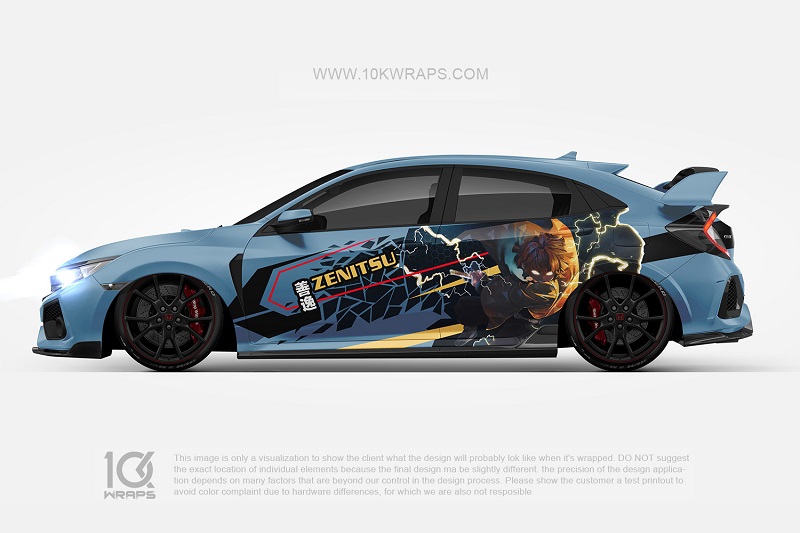
As demand grows, more shops are offering custom sticker services where fans can choose characters, poses, and text combinations. Some even offer color changes or hybrid crossover designs (e.g., combining Demon Slayer with other anime aesthetics or personal branding).

This is where businesses like 10kwraps.com and other anime wrap shops are seeing traction—not just for full itasha wraps, but for sticker kits and one-off vinyls. Artists and wrap designers are increasingly offering downloadable or pre-cut kits featuring Demon Slayer themes.

These stickers are often printed on durable automotive-grade vinyl, laminated for protection, and available in matte, gloss, or even chrome finishes.

The Psychological Power of Anime Stickers

It’s easy to view Demon Slayer car stickers as just fandom fun, but there’s a deeper layer at play here: identity expression.

In a world where most vehicles look the same off the lot, these stickers let drivers say something about who they are—without needing to speak a word. Anime, especially shows like Demon Slayer, often resonates on a deeply personal level. They represent strength, redemption, loyalty, pain, and healing.

Displaying these themes proudly on your ride is more than aesthetic. It’s cultural shorthand among fans, a symbol of shared stories, and a mobile piece of artwork. Whether you’re parked at a con, fueling up, or just cruising through the city, these decals connect you to a community.

Where to Find Demon Slayer Car Stickers

There are several great places to find high-quality Demon Slayer car stickers:

  • Anime conventions: Support independent artists offering unique designs.
  • Online wrap and sticker shops: Platforms like 10kwraps.com provide both stock and customizable options.
  • Etsy: Great for handmade, artistic interpretations.
  • Redbubble / TeePublic: These have a wide range of fan-created artwork, but check for resolution quality and materials before buying.
  • Specialty wrap providers: Some niche companies offer pre-cut sticker kits for cars, motorcycles, laptops, and more.

Final Thoughts

The rise of Demon Slayer car stickers reflects something bigger than just anime trends. It’s about self-expression, art in motion, and a sense of belonging to something vibrant and emotional. Whether you’re rocking a subtle emblem or a full side panel tribute to your favorite Hashira, you’re participating in a growing global movement where cars become canvases—and anime, the language of the street.

As this culture evolves, we’ll likely see even more refined designs, collabs between artists and wrap shops, and sticker kits that blur the line between illustration and automotive design.

So next time you’re stuck in traffic and catch a glimpse of Nezuko clinging to a trunk lid or Rengoku’s flames roaring across a spoiler—give a nod. You’re not just seeing a sticker. You’re witnessing a story, rolling by.


The contemporary trucking business is essential to international trade, but because commercial trucks are so large and heavy, there is an inherent safety concern. In the past, simple laws and driving ability were crucial to truck safety. A new path began with the introduction of advanced technology, which has drastically improved the safety profile of trucks and completely transformed the way they operate. These technological developments are saving lives and making our roads safer for everyone, from reducing driver weariness to averting collisions.

ADAS, or advanced driver assistance system

Advanced Driver Assistance Systems act like a co-pilot, constantly monitoring both the surrounding environment and the driver’s behavior. Features like Automatic Emergency Braking can activate the brakes if the driver doesn’t react quickly enough, while Forward Collision Warning alerts them to potential rear-end collisions.

For drivers who unintentionally drift out of their lane, Lane Departure Warning provides a heads-up, and in some cases, Lane Keeping Assist gently guides the vehicle back on course. These smart technologies help reduce accidents caused by momentary lapses in attention or distraction. You can explore vehicles equipped with these features, like the Toyota Tundra available at https://www.spacecitytoyota.com/new-vehicles-houston/tundra.

Camera and Blind Spot Monitoring Systems

Commercial vehicles are so large that blind spots have long been a major problem. Technology has risen to the occasion to address this pressing safety issue with sophisticated blind spot monitoring systems and extensive camera configurations. This BSM works as a sensor to identify cars in obscured locations and provides the driver with visual or auditory warnings.

Additionally, multi-camera systems eliminate blind spots during lane changes and backup by offering a rotational-degree picture of the vehicle. Some even have pedestrian detection, which significantly lowers the chance of accidents in low-speed and urban settings by warning drivers of nearby vulnerable road users.

Systems for Driver Monitoring

Modern technology directly addresses driver weariness and distraction issues with the help of advanced Driver Monitoring Systems.  In order to identify indicators of fatigue or even impairment, these systems frequently employ inward-facing cameras and artificial intelligence algorithms to examine a driver’s head position and facial expressions.

The device may notify the driver to refocus or take a break when it detects dangerous behavior by vibrating or using visual clues.  This preventative measure is revolutionary in improving driver safety and well-being by averting collisions before they happen.

Predictive maintenance and telemetric

The power of data analytics is also transforming truck safety through telematics systems. These devices collect information in real-time about the location and vehicle performance.

Fleet managers may successfully lower the possibility of accidents by identifying dangerous driving habits and ensuring adherence to hours-of-service guidelines.  Telematics also contributes to preventing maintenance, which keeps an eye on vital truck parts and warns technicians of any problems before they become problems or safety risks.

Improved Braking and Stability Mechanisms

Technology has greatly improved the stability and braking systems of trucks as driver-assistance features. Electronic Stability Control systems automatically apply brakes and lower engine power to prevent sudden accidents, particularly in slick weather.

Advanced braking systems, such as enhanced anti-lock braking systems and complex air brake controls, provide a more reliable and powerful stopping force.  Modern truck safety is cemented by these technical improvements, which provide drivers with more control and stability, especially while transporting huge cargo.

Technology has unquestionably transformed truck safety in today’s world, shifting from a reactive approach to a more proactive, preventive strategy. As innovations continue to advance, the future looks even safer for the trucking industry—an essential part of our economy that prioritizes everyone’s safety on the road. Drivers interested in modern, safety-focused trucks can explore models like the Toyota Tundra at spacecitytoyota.com, designed with these cutting-edge features in mind.