
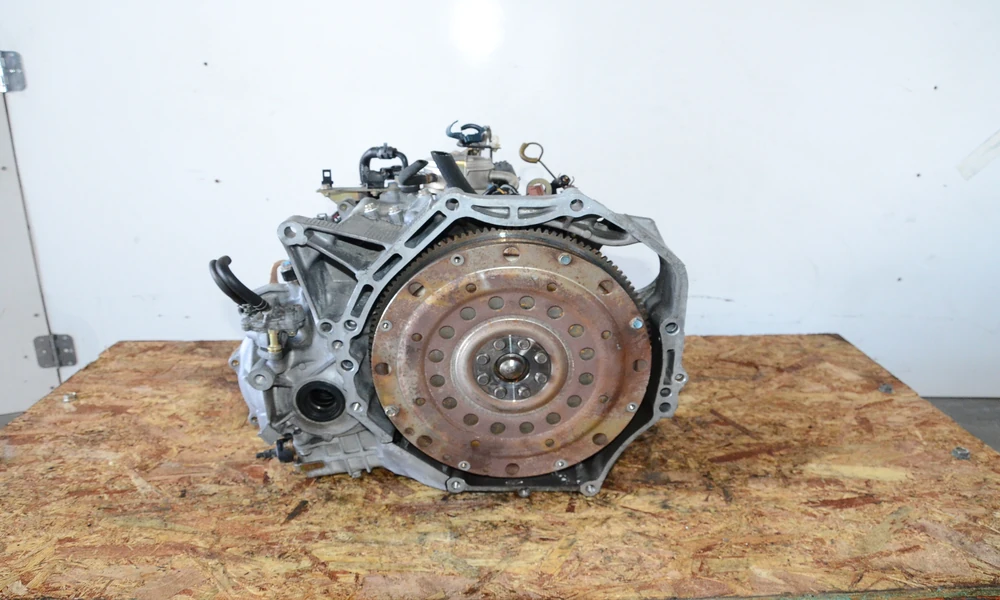
A factory helical limited-slip differential can shave more time off a lap than a modest horsepower bump, and it does so by fixing a problem more power only makes worse. That single fact explains why enthusiasts hunt down specific Acura transmissions instead of grabbing whatever bolts up, and why the differences between them are worth understanding before you buy.
Acura’s front-wheel-drive performance cars shared engine architecture with Honda but often received better drivetrain hardware, and the transmissions are a big part of that story. Understanding what separates them turns a confusing parts search into a clear decision.
What makes an Acura transmission different from a base Honda unit?
The headline differences are gear ratios, final drive, and the differential. Base economy transmissions prioritize fuel efficiency with tall gearing and an open differential that lets a spinning wheel waste power. Performance-oriented Acura units tighten the gear spacing, shorten the final drive for stronger acceleration, and in the top variants add a limited-slip differential that sends torque to the wheel with grip.
The Integra Type R is the reference point. Its transmission paired a close-ratio gearset with an aggressive final drive and a factory helical limited-slip, a combination that transformed how the car put power down out of corners. That is the example most builders chase when they look at Acura JDM transmission options, because recreating that gearing and differential behavior is often the whole point of the swap.
Why does the limited-slip differential matter so much?
A front-wheel-drive car under hard acceleration through a corner tends to spin the unloaded inside wheel, dumping power uselessly while the outside wheel does the work. An open differential makes this worse the more power you add. A limited-slip differential resists that speed difference and keeps torque flowing to the wheel that can use it.
The result is dramatic in exactly the situations that matter: corner exit, wet grip, and hard launches. A helical, or gear-type, limited-slip does this smoothly and requires no maintenance fluid changes the way some clutch-type units do. For a performance build, sourcing a transmission that already includes a factory helical unit saves the considerable cost of retrofitting one, which is why those variants command a premium.
How do gear ratios change the driving experience?
Closely spaced gears keep a high-revving engine in its powerband as you shift, which suits the VTEC-equipped engines these transmissions live behind. A tighter final drive multiplies torque for stronger acceleration at the expense of higher highway rpm. The tradeoff is real: a track-focused ratio set makes a car feel alive on a circuit and buzzy on a long commute.
Matching ratios to use is the whole game. A GS-R transmission offers a sensible balance for a street car that occasionally sees a track. The Type R gearing leans harder toward performance. And the later six-speed found in the RSX Type-S added a ratio, giving builders both closer spacing and a usable overdrive, which made it a favorite for K-series swaps that want performance without highway penalty.
What should you actually check before buying a used unit?
Ratios and differential type come first, because those define what the transmission does. Confirm you are getting the variant you think you are, since visually similar cases can hide very different internals. A transmission that looks like a Type R unit but carries base internals is a common and costly mix-up.
Then assess condition. Synchros wear, and a transmission that crunches into a gear needs work. Ask whether the unit was tested, listen for notes on bearing noise, and check that the limited-slip, if present, is the genuine factory piece rather than a swapped-in open differential. On a used import, the seller’s willingness to describe condition honestly and back it with a warranty tells you as much as any spec.
Which transmission is right for your build?
Work backwards from use. A daily-driven street car benefits from balanced gearing and appreciates an overdrive gear, pushing toward a GS-R-style unit or the six-speed. A dedicated track or autocross build wants the close-ratio, short-final-drive, limited-slip package that made the Type R famous, and will happily tolerate the highway buzz that comes with it. A high-power K-series swap often lands on the six-speed for its combination of ratios and overdrive.
The mistake to avoid is choosing on price alone. A cheap open-differential transmission saves money today and costs lap time and grip forever, and retrofitting a limited-slip later often exceeds what the correct transmission would have cost outright. Buy the gearing and differential your build actually needs, verify the variant is genuine, and confirm the condition before committing.
Will an Acura transmission bolt up to your engine?
Compatibility trips people up because these transmissions span both B-series and K-series engines, and the two families use different mounting and clutch arrangements. A transmission from a B-series car will not simply bolt to a K-series engine, and vice versa, without the correct adapting hardware or the correct matching unit. Confirm which engine family your build uses and source the transmission that pairs with it. Getting this wrong means buying a perfectly good transmission that cannot connect to your engine.
Axles, mounts, and shift linkage also need to match the transmission and the chassis. A swap that changes the transmission generation may require different axles or a modified shifter setup. These are solvable, but each is a task and a cost, so research the specific pairing before you buy rather than after the unit arrives.
What does the right transmission cost you over time?
A quality performance transmission with a genuine limited-slip is an investment that holds value, because these units stay in demand as long as the platform does. Buying the correct unit once costs less than buying a cheap one, discovering it lacks the differential or ratios you needed, and buying again. Factor in a fresh clutch appropriate for your power, because installing a used transmission is the ideal moment to replace a wear item you cannot easily reach afterward. Budget the clutch, any needed axles, and fluid alongside the transmission itself, and the total tells you the real cost of doing the job properly.
One habit separates buyers who end up satisfied from those who do not: they decide on ratios and differential before they ever look at a price. Price shopping first pulls you toward whatever is cheapest, which is usually the base open-differential unit, and you talk yourself into it. Spec shopping first keeps you honest, so the price becomes a tiebreaker among units that already meet your requirements rather than the requirement itself.
Acura built these transmissions to make front-wheel-drive cars corner and launch far better than the layout suggests, and the good variants still do exactly that decades later. Understand the ratios, prioritize the limited-slip when performance is the goal, verify what you are actually buying, and the transmission becomes the component that makes the whole car work rather than the compromise that holds it back.

Comments are closed.