
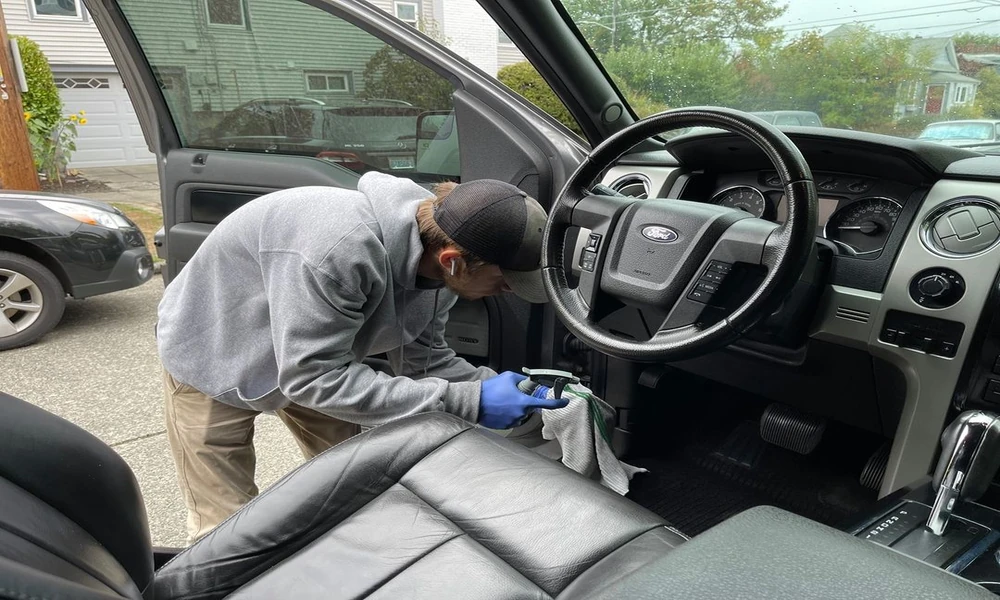
Anyone who has typed “car wash near me” into a search bar has probably noticed how blurry the line has become between a quick exterior rinse and a full-service detail. Mobile operators now show up in driveways and office parking lots offering everything from a five-minute rinse to a multi-hour paint correction, and the pricing can range just as widely. That variety is good for consumers, but it also makes it harder to know what you’re actually paying for.
The short answer is that a mobile car wash and mobile detailing solve different problems. One keeps your car visibly clean on a regular basis. The other addresses the condition of the paint, interior materials, and protective coatings underneath that surface layer. Understanding the distinction – and knowing when each one is appropriate – will save money and, more importantly, protect the vehicle’s long-term value.
What a Mobile Car Wash Actually Covers
A mobile wash is essentially a routine maintenance service brought to your location. Technicians typically arrive with water tanks, pressure equipment, and basic cleaning supplies, then run through a standard sequence: pre-rinse, soap application, hand or brush wash, rinse, and a quick towel dry. Some providers add tire shine or a light interior vacuum as an upsell, but the core job is surface-level cleaning.
This makes a mobile wash ideal for:
- Removing everyday dirt, pollen, road salt, and dust before they bond to the paint
- Maintaining appearance between deeper cleanings
- Quick turnarounds for fleet vehicles, rideshare drivers, or anyone short on time
What it does not do is correct existing damage. A wash won’t remove oxidation, restore faded trim, extract embedded contaminants from the clear coat, or repair stains that have worked into upholstery fibers. It’s maintenance, not restoration.
What Detailing Adds to the Process
Detailing is a more deliberate, labor-intensive process aimed at both cleaning and preserving the vehicle’s finish. A typical detail includes decontamination steps that a standard wash skips entirely – clay bar treatment to pull embedded debris out of the paint, iron removal for brake dust particles, and often a machine polish to reduce swirl marks and light scratches before any wax, sealant, or ceramic coating is applied.
Interior detailing follows the same logic. Instead of a quick vacuum, technicians work through carpet extraction, leather conditioning, steam cleaning of vents and crevices, and treatment of plastic or vinyl surfaces to prevent premature cracking from UV exposure. Because clear coat is only a few dozen microns thick, the products and techniques used matter – over-aggressive polishing can thin it prematurely, while the right approach restores gloss without compromising the layer that protects the paint from UV rays, oxidation, and environmental fallout.
This is where the service and pricing structure tends to become more tiered. Providers like Diamond State Mobile Detailing generally break detailing into levels – a basic interior/exterior package, a mid-tier package with paint decontamination, and premium options that include correction and long-term coatings – because the right level genuinely depends on the vehicle’s age, storage conditions, and how the owner intends to use it.
Comparing the Two Side by Side
| Factor | Mobile Car Wash | Mobile Detailing |
| Time required | 15-30 minutes | 2-8 hours depending on scope |
| Frequency | Weekly or biweekly | Every 3-6 months, or seasonally |
| Focus | Surface dirt removal | Paint condition, protection, interior restoration |
| Typical cost | Lower, comparable to a basic gas-station wash | Higher, reflecting labor and product cost |
| Long-term effect | Maintains appearance | Preserves resale value and material condition |
Neither option replaces the other. A vehicle that only gets washed will accumulate the kind of fine scratching and oxidation that a wash can’t touch. A vehicle that’s detailed occasionally but never washed in between will still collect the everyday grime that erodes a fresh detail’s benefits faster than it should.
Why the Distinction Matters for Vehicle Value
Paint condition has a measurable effect on resale value, which is part of why detailing is often framed as an investment rather than a discretionary expense. A well-maintained clear coat resists the oxidation and fading that make a car look older than its actual mileage suggests, and buyers – private or dealer – notice that difference immediately during an inspection.
There’s also an environmental angle worth knowing. Washing a car in a driveway sends detergent-laden runoff, along with oils and metals rinsed off the vehicle, directly into storm drains in many municipalities, since that water isn’t treated before reaching local waterways. The U.S. Environmental Protection Agency has flagged residential car washing as a notable contributor to this kind of nonpoint-source pollution, in contrast to commercial operations that are generally required to route wastewater to treatment facilities.1 Mobile services that follow proper containment and runoff practices, or that use low-water, biodegradable products, tend to align better with these standards than an at-home hose-and-bucket routine – something worth asking about if a provider works on a paved driveway or street.
Water efficiency is another factor. Commercial and professional mobile operations using modern equipment often use significantly less fresh water per vehicle than an untrained at-home wash, according to research compiled for the water-efficiency programs tracked by the EPA’s WaterSense initiative.2 That efficiency, combined with proper wastewater handling, is one of the less obvious reasons professional services have become the more responsible default in many areas.
Choosing Between the Two
A few honest questions can clarify which service actually fits a given situation:
Is the goal appearance or preservation? If you just need the car looking presentable for the week, a wash covers it. If you’re trying to protect the paint’s long-term condition or prep the car for sale, detailing is the more relevant service.
How is the car stored and driven? Vehicles parked outdoors full-time, driven on salted roads, or used commercially accumulate contaminants faster and benefit from more frequent detailing intervals, with washing filling the gaps in between.
What’s the vehicle’s age and condition? Newer vehicles with intact clear coat may only need periodic maintenance details. Older vehicles showing oxidation, water spotting, or interior wear usually need a full correction pass before a maintenance routine will do much good.
What’s the budget and timeline? Washing is the lower-cost, higher-frequency option. Detailing costs more per visit but extends the intervals between major maintenance and reduces the odds of paying for expensive correction work later.
Most experienced vehicle owners settle into a rhythm: a wash every one to two weeks to keep dirt from settling into the finish, paired with a full detail two to four times a year depending on climate and mileage. For anyone building out that kind of schedule, it’s worth reviewing what a full range of exterior, interior, and paint-protection packages actually includes before booking, since providers structure their tiers differently and the right combination depends on the specifics above.
The Bottom Line
Framing this as a competition between mobile washing and detailing misses the point. They operate on different timelines and solve different problems – one keeps a car looking clean day to day, the other protects what’s underneath that clean surface. Vehicles that get both, on a schedule that matches how they’re actually driven and stored, tend to hold their condition and value far better than those that rely on either service alone.

Comments are closed.